
CBCT + Digital Dentistry: The New Workflow for Implant Clinics
Dental implant success rates are climbing thanks to CBCT dental imaging and digital dentistry workflow integration. This technology combo is changing how implant clinics plan treatments, reduce chair time, and boost patient satisfaction.
Who this guide helps: Implant specialists, general dentists adding implant services, and practice owners considering digital dental technology upgrades.
Traditional implant planning relied on 2D X-rays and guesswork. Today’s cone beam CT dentistry gives you 3D views of bone density, nerve locations, and sinus cavities before you make the first cut. Combined with digital treatment planning software, you can map entire procedures virtually.
We’ll break down how CBCT technology transforms your diagnostic capabilities and show you real numbers on dental practice ROI when you invest in modern dental equipment. You’ll also get actionable implementation strategies to add these tools to your practice without disrupting patient flow.
The shift from analog to computerized dental treatment isn’t just about having cooler technology – it’s about predictable outcomes, faster procedures, and happier patients who refer their friends.
Understanding CBCT Technology in Modern Dental Practice
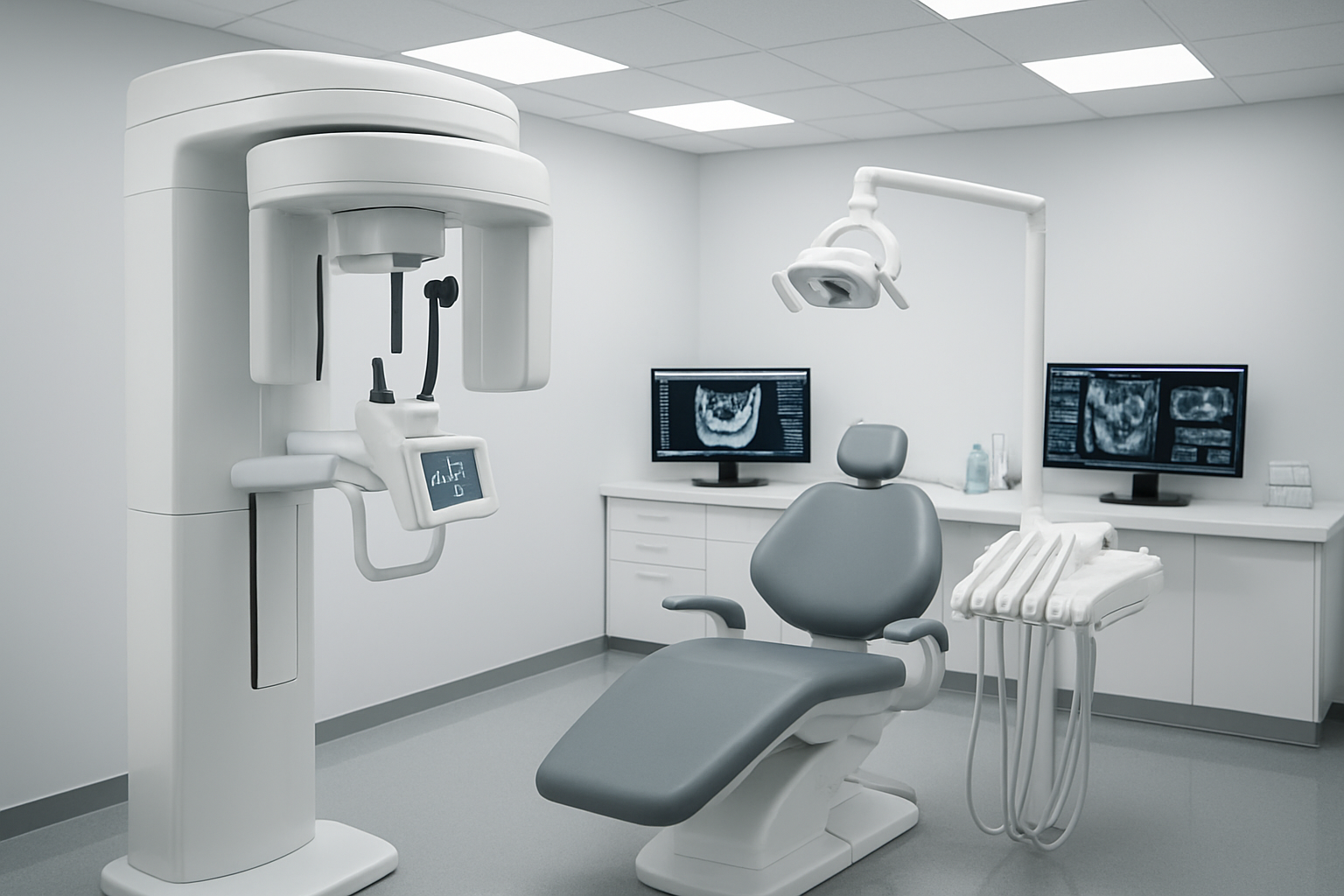
Enhanced 3D Imaging Capabilities Over Traditional X-Rays
CBCT dental imaging represents a quantum leap from conventional 2D radiography, delivering three-dimensional visualization that transforms how dentists approach implant planning. While traditional X-rays provide flat, overlapping images that can obscure critical anatomical structures, cone beam CT dentistry captures volumetric data with exceptional clarity and precision.
The technology works by rotating around the patient’s head, taking hundreds of individual images that are reconstructed into detailed 3D models. This process reveals bone density variations, nerve pathways, sinus cavities, and existing root structures with millimeter accuracy. For implant procedures, this level of detail proves invaluable when determining optimal placement angles and depths.
Key advantages over traditional radiography:
- Dimensional accuracy: CBCT provides true 1:1 measurements, eliminating guesswork in implant sizing
- Cross-sectional views: Multiple viewing planes reveal hidden pathologies and anatomical variations
- Reduced radiation exposure: Modern CBCT systems use significantly lower radiation doses than medical CT scans
- Immediate results: Digital acquisition means images are available within minutes of scanning
| Feature | Traditional X-Ray | CBCT Imaging |
|---|---|---|
| Dimensional View | 2D only | Full 3D reconstruction |
| Bone Quality Assessment | Limited | Comprehensive density mapping |
| Anatomical Detail | Basic structures | Complete anatomical visualization |
| Measurement Accuracy | Estimated | Precise to 0.1mm |
The superior imaging quality directly impacts treatment outcomes by reducing surgical complications and improving implant success rates through better pre-surgical planning.
Real-Time Visualization for Better Treatment Planning
Digital dental technology has revolutionized treatment planning through interactive 3D visualization tools that allow real-time manipulation of CBCT data. Practitioners can now rotate, slice, and examine anatomical structures from any angle, creating a virtual operating environment before the actual procedure begins.
Modern CBCT software enables dynamic treatment planning where clinicians can virtually place implants, adjust angles, and simulate surgical approaches instantly. This real-time capability allows for immediate assessment of different treatment options, helping dentists select the most conservative and effective approach for each patient.
Real-time planning benefits:
- Interactive case review: Rotate and zoom through 3D datasets during patient consultations
- Immediate modifications: Adjust implant positions and angles with instant feedback on anatomical conflicts
- Risk assessment: Identify potential complications before they occur in surgery
- Patient communication: Visual treatment presentations improve case acceptance rates
The technology integrates seamlessly with digital dentistry workflow systems, allowing practitioners to combine CBCT data with intraoral scans and digital impressions. This comprehensive digital approach creates a complete virtual patient model that serves as the foundation for guided surgery protocols and custom prosthetic design.
Advanced visualization tools also support collaborative treatment planning, where specialists can review cases remotely and provide input on complex procedures. The ability to share high-resolution 3D images instantly improves communication between referring doctors and specialists, leading to better coordinated care and more predictable outcomes.
Digital Dentistry Integration Benefits for Implant Procedures
Streamlined Patient Data Management Systems
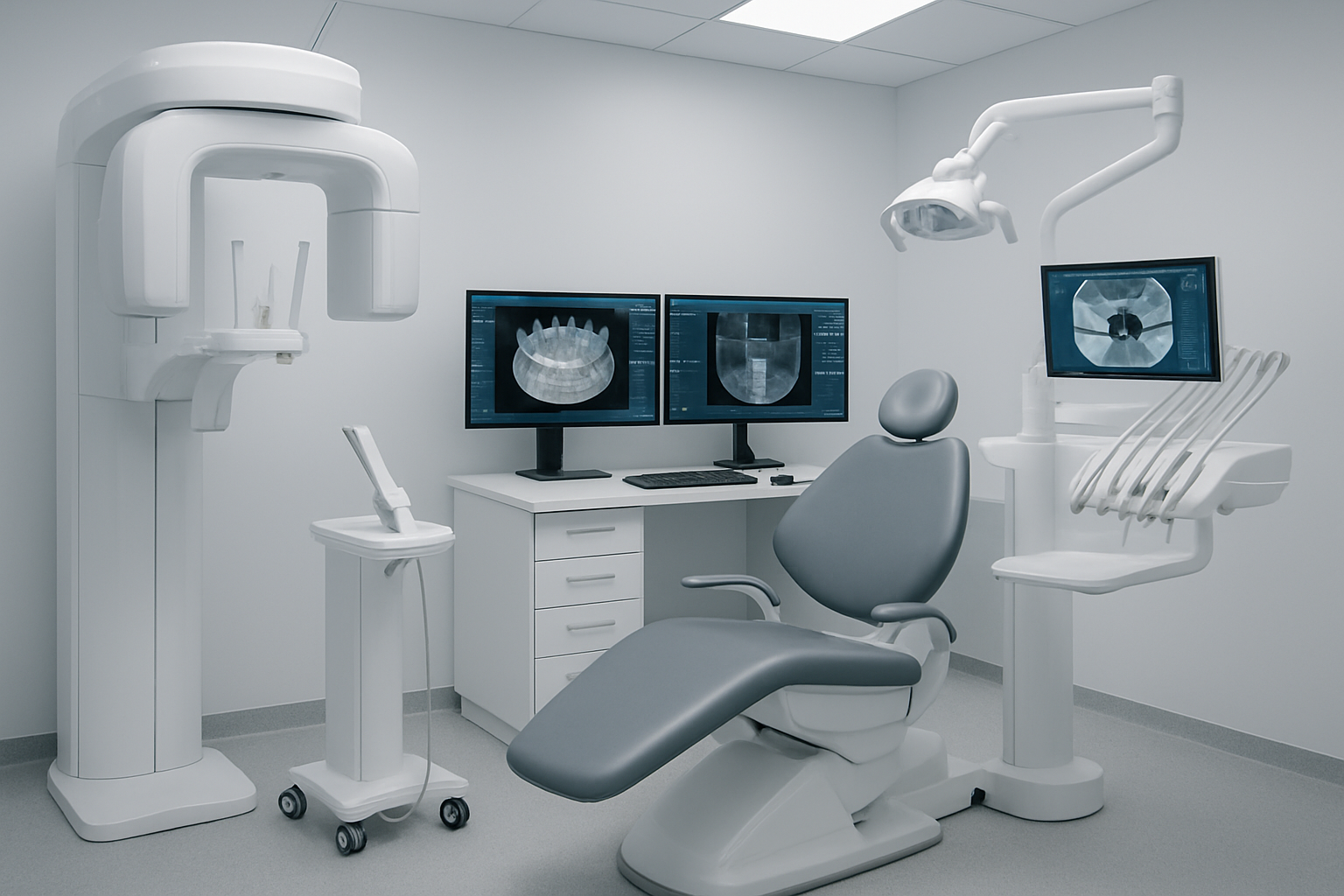
Digital dentistry workflow transforms how implant clinics handle patient information, creating a centralized hub where all treatment data lives in one accessible location. CBCT dental imaging integrates seamlessly with practice management software, allowing dental teams to view 3D scans alongside patient history, treatment plans, and progress notes with just a few clicks.
Modern dental equipment now communicates across platforms, meaning your cone beam CT dentistry results automatically populate into treatment planning software. This eliminates the time-consuming process of manually transferring data between systems. Dental teams can access comprehensive patient files that include everything from initial consultation notes to post-surgical follow-up images, creating a complete digital record that travels with the patient throughout their treatment journey.
Cloud-based storage solutions ensure patient data remains secure while being instantly available to authorized team members. Whether the periodontist needs to review imaging from their office or the lab technician requires access to scan specifications, everyone works from the same updated information. This unified approach reduces errors that often occur when data gets lost between different software systems or when team members work with outdated files.
Accurate Digital Impressions and Treatment Simulations
3D dental imaging combined with digital impression technology creates treatment simulations that were impossible with traditional methods. Dental implant planning software uses CBCT data to map out exact implant positions, accounting for bone density, nerve pathways, and adjacent tooth structures. These simulations show patients exactly what their final results will look like before any surgical procedures begin.
Digital impressions capture precise measurements that feed directly into computerized dental treatment planning systems. The accuracy level surpasses traditional impression materials, with digital scans providing measurements accurate to within 20 microns. This precision translates into better-fitting prosthetics and reduced chair time for adjustments.
Treatment simulations allow for virtual try-ins where patients can see their new smile from multiple angles. Surgeons can practice complex procedures in the virtual environment, identifying potential complications before they occur. This preparation dramatically reduces surgical time and improves outcomes. When unexpected anatomy presents itself during surgery, the detailed pre-surgical planning provides roadmaps for alternative approaches.
The software generates surgical guides based on these simulations, ensuring implants are placed exactly where planned. These guides snap into place over existing teeth or tissue, providing physical references that match the virtual planning. The result is predictable, reproducible outcomes that build patient confidence and streamline the surgical process.
Improved Communication Between Dental Teams
Digital workflows break down communication barriers that traditionally existed between different specialists involved in implant cases. When oral surgeons, prosthodontists, and lab technicians all access the same digital files, everyone works toward identical goals with shared understanding of the treatment plan.
Real-time collaboration becomes possible when teams share access to treatment planning software. A prosthodontist can modify provisional designs while the surgeon reviews the changes instantly, making adjustments that optimize both surgical and restorative outcomes. This immediate feedback loop prevents costly revisions later in the treatment process.
Visual communication tools built into modern dental practice ROI systems allow team members to annotate images, highlight specific areas of concern, and leave notes for colleagues. Instead of trying to describe complex anatomical features over the phone, team members can point directly to areas on shared 3D models. This visual approach eliminates misunderstandings that often lead to treatment delays or complications.
Remote consultation capabilities expand team collaboration beyond the physical office. Specialists can review cases from different locations, providing input on complex treatments without requiring in-person meetings. This flexibility allows clinics to access expert opinions that might not be available locally, improving patient care while maintaining efficiency.
Patient education improves dramatically when the entire team speaks the same visual language. Treatment coordinators can show patients the same images and simulations that surgeons use for planning, creating consistency in how treatment benefits are communicated. Patients develop greater confidence when they see that all team members understand their specific case details and treatment goals.
Revolutionary Workflow Changes in Implant Planning
Virtual Implant Placement Before Surgery
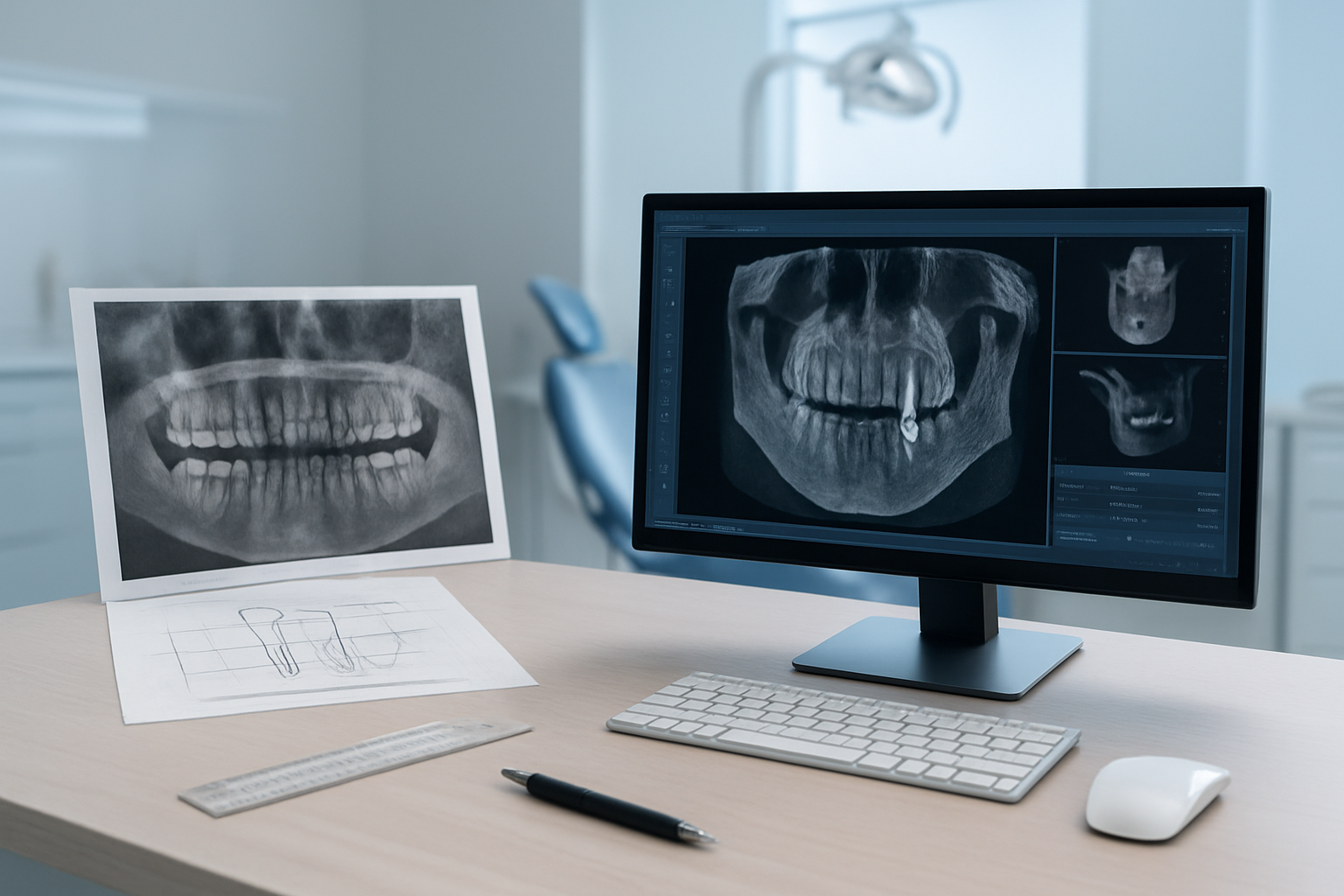
Digital dentistry workflow has completely changed how clinicians approach implant treatment planning. With CBCT dental imaging and advanced software, dental professionals can now position implants virtually with millimeter precision before making a single incision. This virtual planning process allows doctors to evaluate bone density, anatomical structures, and optimal implant angles in a three-dimensional environment.
The software integrates CBCT scans with digital impressions or intraoral scans, creating a comprehensive view of the patient’s oral anatomy. Clinicians can test different implant sizes, positions, and prosthetic designs digitally, making adjustments until they achieve the perfect treatment plan. This computerized dental treatment approach eliminates guesswork and provides a clear roadmap for surgery.
Customized Surgical Guide Creation
3D dental imaging data directly translates into precision-manufactured surgical guides. These custom guides act like GPS systems for implant placement, ensuring the exact position, angle, and depth determined during virtual planning transfers accurately to the surgical site.
Modern digital dental technology creates guides using biocompatible materials that fit precisely over the patient’s teeth or tissues. The guides feature sleeves that direct the drill sequence, maintaining the predetermined trajectory throughout the procedure. This level of precision was impossible to achieve with traditional freehand techniques.
The manufacturing process typically takes 3-5 business days, and guides can be tooth-supported, tissue-supported, or bone-supported depending on the clinical situation. Each guide is unique to the patient and specific procedure, ensuring optimal fit and function.
Predictable Treatment Outcomes and Success Rates
Cone beam CT dentistry combined with guided surgery protocols significantly improves implant success rates. Studies show guided implant placement achieves positioning accuracy within 1-2mm compared to 3-5mm with conventional methods. This precision translates directly into better long-term outcomes and reduced complications.
Predictability extends beyond just implant positioning. Virtual planning allows assessment of prosthetic space, emergence profiles, and esthetic outcomes before surgery begins. Patients can see their expected results through digital mock-ups, creating realistic expectations and improved satisfaction.
The data also shows reduced healing complications, better primary stability, and fewer post-operative adjustments when using guided protocols compared to traditional approaches.
Reduced Chair Time for Patients
Digital implant planning streamlines the entire treatment process, significantly reducing time patients spend in the dental chair. Traditional implant procedures often required multiple appointments for planning, impressions, and adjustments. The new workflow condenses these steps into fewer visits.
Surgical procedures become more efficient because every step is pre-planned. Doctors know exactly where to place implants, which instruments to use, and can prepare all necessary components in advance. Many guided surgeries take 30-50% less time than conventional approaches.
Patients also experience less discomfort during shortened procedures. Reduced surgical time means less tissue trauma, decreased swelling, and faster recovery periods.
Minimized Human Error in Implant Positioning
Dental implant planning software eliminates many variables that contribute to positioning errors. The guided approach removes reliance on visual estimation and hand-eye coordination during critical placement steps. Instead, the surgical guide mechanically controls drill direction and depth.
This technology particularly benefits complex cases involving multiple implants or anatomical challenges. The system maintains consistent accuracy regardless of case complexity or surgeon experience level. Even highly skilled clinicians benefit from the added precision and reproducibility.
Implant clinic efficiency improves dramatically as revision surgeries and complications decrease. The predictable nature of guided procedures allows better scheduling, resource allocation, and treatment planning across the entire practice.
Cost-Effectiveness and ROI for Implant Clinics

Reduced Need for Multiple Appointments
CBCT dental imaging and digital dentistry workflow create a streamlined treatment process that dramatically cuts appointment numbers. Traditional implant procedures often require separate visits for initial consultation, impressions, treatment planning, surgery, and restoration placement. With cone beam CT dentistry integrated into your workflow, you can complete comprehensive diagnosis, planning, and surgical guide fabrication in a single visit.
The digital dental technology allows real-time treatment planning during the patient consultation. You can show patients their 3D anatomy, plan implant placement virtually, and order surgical guides while they’re still in the chair. This compressed timeline means fewer appointment slots blocked out for single cases, allowing you to see more patients and increase revenue potential.
Patients particularly appreciate this efficiency. They spend less time traveling to your office, taking time off work, and managing the anxiety that comes with multiple appointments stretched over months. The reduced appointment schedule also means fewer opportunities for patients to change their minds or seek treatment elsewhere.
Decreased Material Waste and Remake Costs
Digital workflows eliminate many of the material costs and remakes that plague traditional implant procedures. Physical impressions, temporary materials, and multiple prosthetic adjustments become largely unnecessary when you implement computerized dental treatment planning.
Traditional impression materials, from alginate to polyvinyl siloxane, represent significant recurring costs. Digital scanning eliminates these expenses entirely while providing superior accuracy. The precision of 3D dental imaging reduces the likelihood of ill-fitting restorations that require costly remakes.
Surgical guides produced from CBCT data ensure accurate implant placement, reducing complications that lead to additional procedures. When implants are placed in optimal positions from the start, you avoid the costs associated with:
- Revision surgeries
- Additional healing time
- Replacement components
- Patient satisfaction issues
Laboratory fees also decrease when digital files can be shared directly with dental labs, eliminating shipping costs for physical models and reducing turnaround times.
Increased Patient Acceptance Rates
The visual impact of CBCT technology significantly improves case acceptance rates for implant procedures. When patients can see their bone structure, understand their treatment needs, and visualize expected outcomes through 3D imaging, they make more confident treatment decisions.
Modern dental equipment creates an impressive patient experience that builds trust and confidence. Patients perceive practices using advanced technology as more competent and current with the latest techniques. This perception translates directly into higher acceptance rates for recommended treatments.
The ability to show patients exactly how implants will look and function using digital treatment planning removes much of the uncertainty that causes hesitation. Patients can see before-and-after simulations, understand the surgical process, and feel more comfortable moving forward with treatment.
Studies show practices using CBCT and digital workflows report case acceptance rates 40-60% higher than those using traditional methods. The investment in technology pays for itself through this increased acceptance alone.
Higher Case Value Through Premium Services
Digital dentistry workflow positions your practice to offer premium implant services that command higher fees. Patients willingly pay more for treatments that use cutting-edge technology and provide superior outcomes. The precision and predictability of CBCT-guided implant placement allows you to confidently offer advanced procedures like full-arch reconstructions and immediate loading protocols.
Same-day implant procedures, enabled by digital planning and surgical guides, represent significant revenue opportunities. These premium services often carry fees 20-30% higher than traditional staged approaches while requiring less chair time per case.
The efficiency gains from digital workflows also allow you to increase your case volume without proportionally increasing overhead costs. You can complete more implant cases per day while maintaining high-quality standards, directly impacting your dental practice ROI.
| Traditional Workflow | Digital CBCT Workflow | Revenue Impact |
|---|---|---|
| 4-6 appointments per case | 2-3 appointments per case | 25% more cases possible |
| 15% remake rate | 3% remake rate | $2,400 saved per 100 cases |
| 45% case acceptance | 70% case acceptance | 55% more revenue per consultation |
The combination of reduced costs, increased efficiency, and premium pricing creates a powerful financial advantage that quickly justifies the initial investment in CBCT and digital technology.
Implementation Strategies for Dental Practices

Staff Training Requirements and Timeline
Bringing CBCT dental imaging and digital dentistry workflow into your practice requires a well-planned training approach. Your team will need comprehensive education on both the technical aspects and patient interaction elements of this advanced technology.
Plan for a 6-8 week training period to get everyone comfortable with the new systems. Dental assistants typically need 20-25 hours of hands-on training to master CBCT operation, image positioning, and basic troubleshooting. Hygienists require additional time to understand how 3D dental imaging integrates with their patient care routines.
Your clinical staff should focus on understanding digital dental technology workflows, from initial scans to treatment planning software navigation. Schedule training during slower periods or consider bringing in temporary staff to maintain patient flow while your team learns.
Most CBCT manufacturers offer comprehensive training packages that include:
- Initial installation and setup support
- On-site clinical training sessions
- Remote technical support during the first month
- Ongoing webinar access for skill refinement
Don’t overlook administrative staff training. Your front desk team needs to understand scheduling requirements, insurance coding changes, and how to explain the technology benefits to patients calling with questions.
Equipment Investment Planning and Financing Options
Modern dental equipment investments require careful financial planning. A quality CBCT system ranges from $150,000 to $400,000, depending on features and capabilities. Digital dentistry workflow integration adds another $50,000 to $100,000 for treatment planning software, guided surgery systems, and related technology.
Smart financing approaches help spread this investment over time while maintaining cash flow. Equipment leasing options typically offer lower upfront costs and include maintenance packages. Many practices choose 5-7 year lease terms with buyout options.
Consider these financing strategies:
| Option | Benefits | Considerations |
|---|---|---|
| Equipment Lease | Lower monthly payments, maintenance included | Higher total cost, no ownership |
| Bank Loan | Own equipment, potential tax benefits | Higher monthly payments, separate maintenance |
| Manufacturer Financing | Special rates, integrated support | Limited to specific brands |
| Cash Purchase | Lowest total cost, immediate ownership | High upfront investment, self-funded maintenance |
Calculate your expected return on investment based on increased case acceptance rates and higher-value treatments. Most implant clinics see ROI within 18-24 months when they properly market their advanced capabilities.
Patient Communication About New Technology Benefits
Patients often feel anxious about new dental technology, so clear communication builds trust and acceptance. Start conversations by focusing on comfort and precision rather than technical specifications.
Explain how CBCT dental imaging provides detailed views that help avoid complications and reduce treatment time. Patients appreciate knowing that computerized dental treatment planning means fewer appointments and more predictable outcomes.
Create simple visual materials that show the difference between traditional X-rays and 3D imaging. Before-and-after case studies help patients understand the value proposition. Many practices display CBCT images on chairside monitors to walk patients through their specific treatment plans.
Key talking points that resonate with patients:
- More accurate diagnosis leads to better treatment outcomes
- Reduced radiation exposure compared to traditional CT scans
- Faster treatment planning means quicker resolution of dental issues
- Less invasive procedures with guided surgery technology
- Higher success rates for dental implant planning
Train your staff to answer common questions about safety, cost, and time requirements. When patients understand the technology benefits their specific situation, they’re more likely to accept treatment recommendations.
Marketing Advanced Services to Attract New Patients
Position your practice as a leader in dental implant planning and digital dental technology. Your marketing should emphasize expertise and advanced capabilities that other practices can’t match.
Develop case studies showcasing successful implant cases completed with CBCT guidance. Before-and-after photos demonstrate the precision and aesthetic outcomes possible with modern dental equipment. Share these stories across your website, social media, and patient newsletters.
Target marketing messages to different patient segments:
Implant Candidates: Highlight faster healing times and higher success rates with digital planning
Anxious Patients: Emphasize comfort and precision that reduces unexpected complications
Busy Professionals: Focus on streamlined appointments and predictable treatment timelines
Partner with local physicians and specialists who can refer complex cases requiring advanced imaging. Many medical doctors appreciate having a dental partner with CBCT capabilities for comprehensive patient care.
Optimize your online presence with SEO keywords related to implant clinic efficiency and 3D dental imaging. Patients increasingly research advanced dental services online before choosing a provider.
Host community education events showcasing your technology. Open houses and lunch-and-learn sessions let potential patients see the equipment and meet your trained staff. These personal connections often convert into treatment appointments more effectively than traditional advertising.
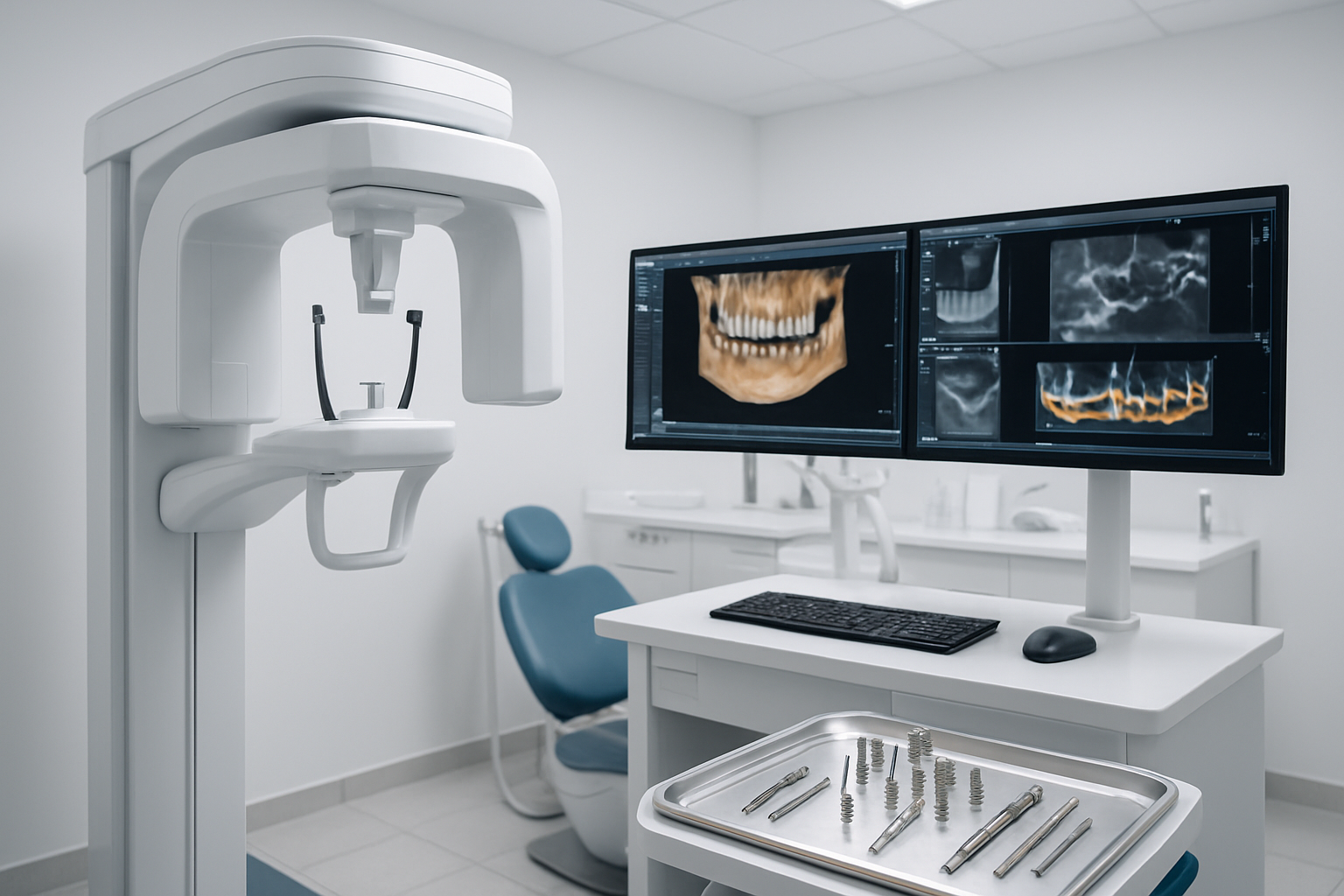
CBCT technology combined with digital dentistry has completely changed how implant clinics operate today. The integration brings together precise 3D imaging, streamlined planning software, and digital workflows that make implant procedures more predictable and efficient. Clinics can now plan cases with incredible accuracy, reduce chair time, and deliver better patient outcomes while seeing improved returns on their technology investments.
The shift to this digital workflow isn’t just about having the latest gadgets – it’s about fundamentally improving patient care and practice efficiency. If you’re running an implant clinic and haven’t made this transition yet, now is the time to evaluate your current processes and consider how CBCT and digital integration can transform your practice. Start small, train your team properly, and watch as your implant success rates climb while your patients experience smoother, more comfortable treatments.